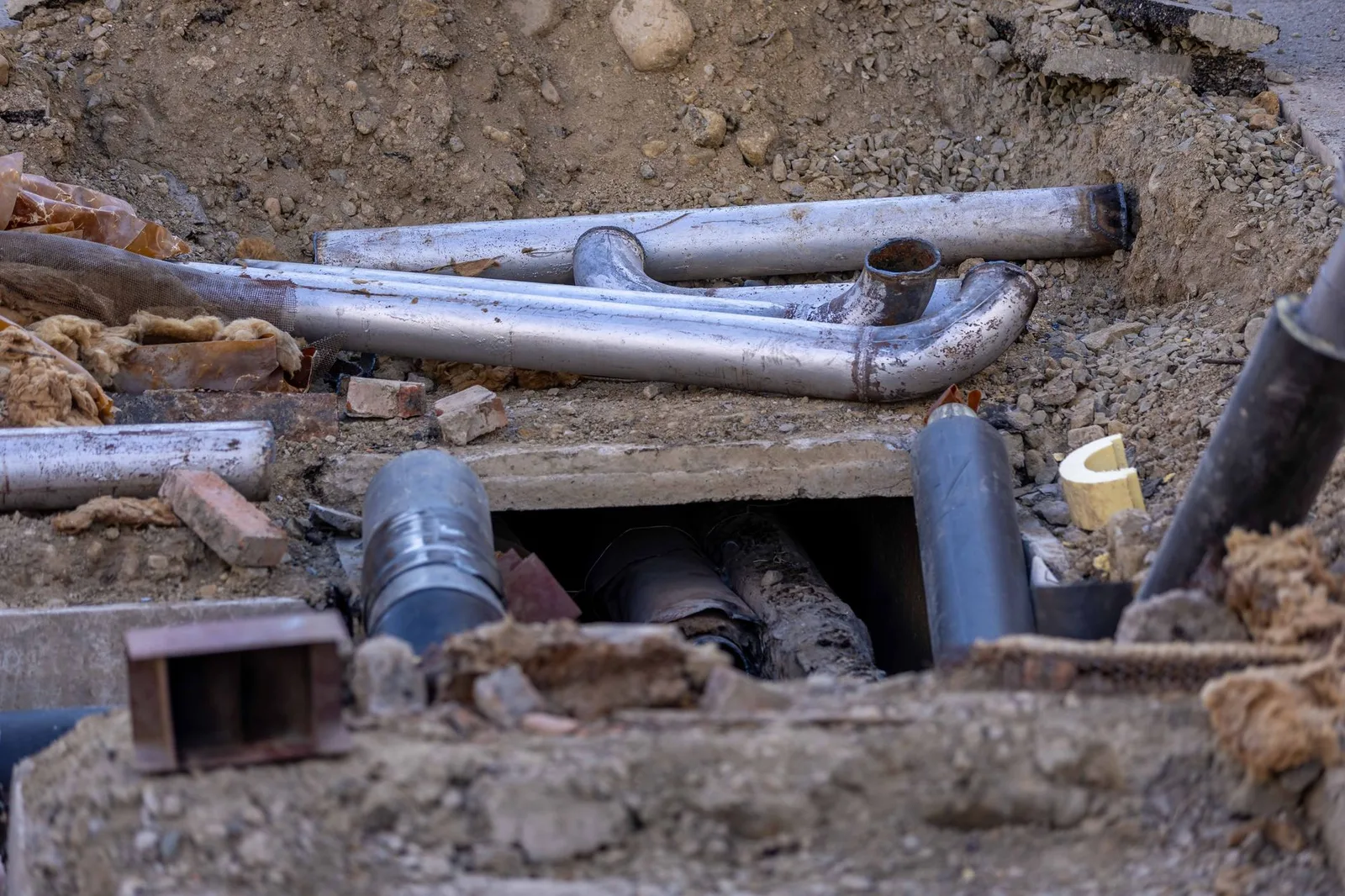
An easement is a legal right someone else holds over part of your land, usually for a sewer, drain or shared driveway. Some barely dent a development site; others quietly kill a duplex design. The difference comes down to where the easement sits and what runs through it. Here's how to find yours and read what it does to your land value.
Two owners get feasibility numbers on near-identical blocks and one comes back hundreds of thousands lower. The house isn't the reason. The reason is a line on the title plan neither owner had ever looked at closely: an easement running through the middle of one block, hugging the boundary of the other. Same suburb, same zoning, very different development value, and it all comes down to a strip of land you can't build over.
We assess blocks with easements on them constantly, and owners are often surprised how much a quiet legal encumbrance can move the number. So here's what an easement actually is, how to find the ones on your property, and how a developer reads them when working out what your land is worth.
What an easement actually is
An easement is a right that someone else, or some authority, holds to use part of your land for a defined purpose, even though you still own it. The most common types on suburban blocks are a sewer or drainage easement, where a pipe runs under your ground and the water authority has the right to access it, and a right-of-carriageway, where a neighbour has a legal right to drive over a strip of your land to reach their own, typical on battle-axe and rear lots. There are also easements for services like electricity, water and telecommunications.
The practical effect is the same in every case: you cannot build over or obstruct the easement without permission, and often you can't get that permission at all. That strip is spoken for.
How to find the ones on your title
Easements are recorded against the title, and in NSW they usually appear through what's called a section 88B instrument, the document lodged when the land was subdivided that sets out the easements, restrictions and covenants burdening or benefiting each lot. Your title search will reference it, and the deposited plan shows where each easement physically sits on the block, its position, width and purpose.
If you're serious about a development, don't rely on the survey pegs or the fence line. Order the title search and the 88B instrument, and get the deposited plan, so you can see exactly where the easement runs and how wide it is. A conveyancer or your surveyor can pull these quickly. This is the same due diligence we build into any suitability check on a block: you want to know what's on the title before you design anything, not after.
What each type does to your buildable envelope
The buildable envelope is the area left once you subtract setbacks, and an easement carves straight out of it. A drainage or sewer easement means no building over the pipe, and with Sydney Water assets in particular you can't build over or near their infrastructure without a formal build-over application and approval, which they don't grant lightly. A right-of-carriageway ties up a driveway-width strip permanently for the benefit of another lot.
Whether that hurts depends entirely on geometry. Take the exact same easement and put it in two places. Along the rear or side boundary, tucked where you'd have left setback or yard anyway, and it may cost you almost nothing; the design flows around it and the land value barely moves. Run it diagonally through the centre of the block, straight across where the building would sit, and it can make a duplex or townhouse layout impossible to fit, forcing a smaller scheme or none at all. It's the point we made in how developers value your land: an easement through the middle barely dents a home's value while gutting its development value, because a family lives around the pipe and a developer can't build over it.
Boundary-hugging versus design-killer
So the single most useful question about your easement isn't "do I have one," it's "where does it sit." A boundary-hugging easement is usually a minor issue. It sits in dead space, the design accommodates it, and a developer prices it as a small constraint. A central easement is a different animal. It dictates where the buildings can go, often shrinks the achievable yield, and can turn a two-dwelling site into a one-dwelling site. That drop in yield is the whole ballgame for development value.
Width matters too. A narrow services easement is easier to work around than a wide drainage reserve. And the purpose matters: a right-of-carriageway you benefit from is an asset, while one that burdens your land for a neighbour is a cost. Reading all of that off the plan is what turns a vague worry into a real number.
Can you move or remove it?
Sometimes, yes, but it's rarely quick or free. An easement can be modified or extinguished by agreement with the party who benefits from it; if a neighbour holds a right-of-carriageway they no longer need, they may agree to release it, often for a payment. Where agreement isn't possible, the Supreme Court can extinguish or modify an easement under section 89 of the Conveyancing Act 1919, generally where the easement is obsolete, abandoned, or its continuation would impede reasonable use of the land without real benefit to anyone. That's a legal process with cost and uncertainty attached, and for a live services easement over a working sewer, extinguishment usually isn't on the table at all; the pipe has to go somewhere.
The realistic planning position is to design around the easement first, and only chase modification where there's a clear, willing counterparty. Treating removal as a certainty is how development budgets get into trouble.
Why developers price easements straight off the residual
Here's the part that ties it together. A developer doesn't add a vague "easement discount" to your offer. They work out what your land can yield with the easement in place, run that reduced project through their feasibility, and the residual land value falls out the other end. If the easement costs you a dwelling, it costs you that dwelling's share of the profit, and that comes straight off what they can pay. If it costs you nothing buildable, it costs you nothing in the offer.
That's why two owners with the same zoning get different numbers, and why the easement's position, not just its existence, is what you need to understand before you list. It also feeds directly into the cost of subdividing, because an easement can force extra drainage work or a build-over application that lands in the cost line.
PropertyThrive reads the title, the 88B instrument and the plan as part of every free assessment, and tells you honestly whether your easement is a minor boundary matter or a genuine constraint on what the land is worth. Book a free consultation and we'll come back to you with the real numbers within 24 hours.
Ready to get started with developing a property?
Get your development assessment or speak with our development experts today
24-Hour Response Guarantee
Submit your details and receive your preliminary development assessment within 24 hours, guaranteed.
No Obligation, Completely Free
Our assessment and initial consultation are completely free with no strings attached. Only proceed if you're 100% happy.
Strategic Development Partnerships
Partner with us to maximise development potential through joint ventures, profit-sharing, or direct acquisition options.