A developer's letter promises a premium for your block. Before you reply, there are six checks that take an afternoon and cost nothing: the licence register, the ABN, home building compensation cover, the projects they say they've built, the contract itself, and the people they've done this with before. Here is how to run each one in NSW, with the government pages to use.
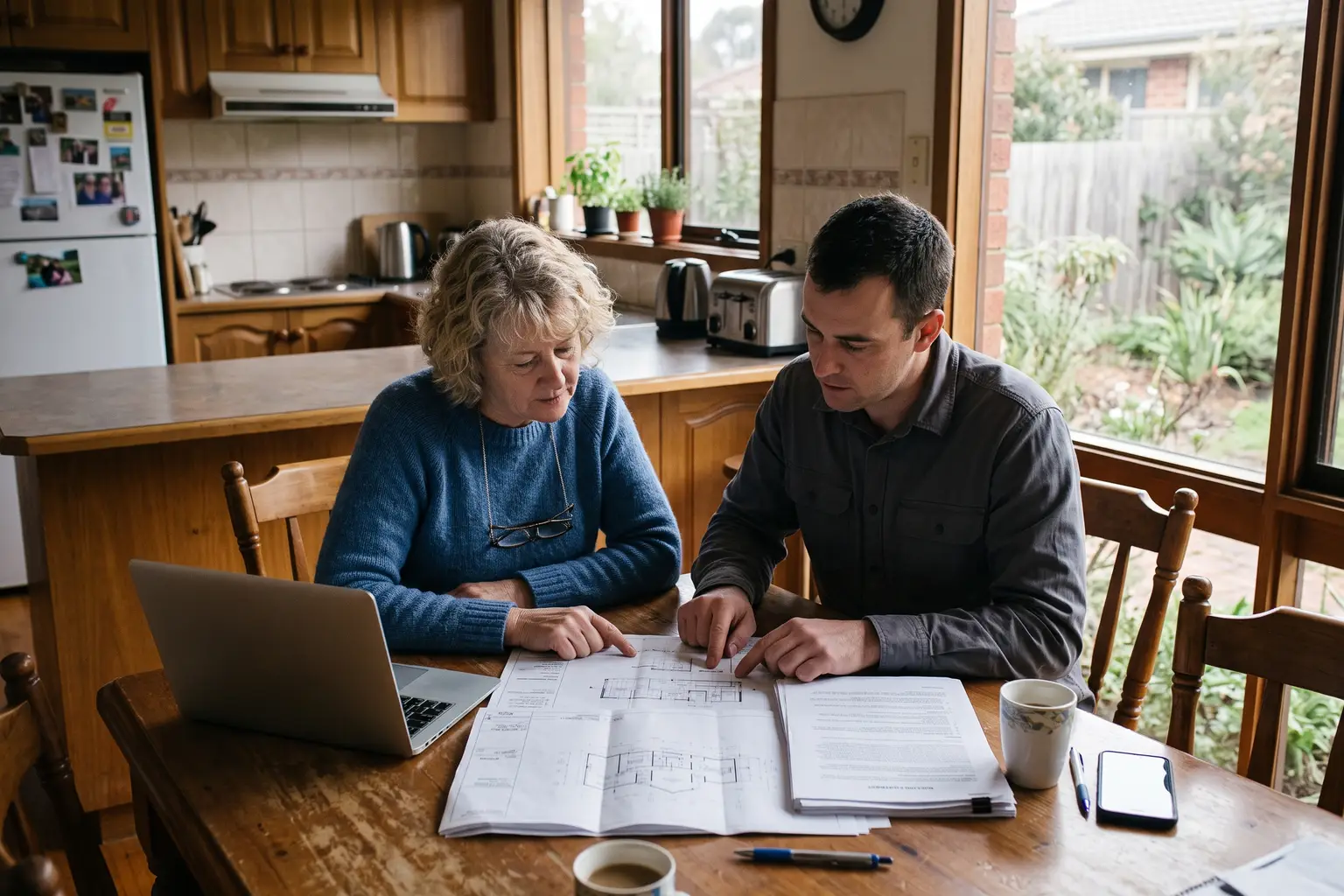
The owner had two letters on the kitchen table when we visited. Both were from outfits calling themselves property groups, both wanted her 700 square metre block, and both used the word premium. One had a builder licence number printed in the footer. The other had a mobile number and a Gmail address. She'd already had a phone call with the second one, and they were the ones pushing hardest for a signature.
That's the situation this post is for. Whether you're being asked to sell, to partner, or to hand over a deposit on something they're going to build, the question is the same: is this developer who they say they are, and can they do what they say they'll do? We're a developer ourselves, we buy and partner on sites across NSW, and our licence sits in the footer of every page on this site precisely because we expect to be checked. So here's how to check.
How to vet a property developer in Australia
Run six checks before you sign anything: the builder licence on the state register, the ABN on the national register, evidence of home building compensation cover, the projects they claim as their own, the contract against the legal requirements for your state, and references you find yourself rather than ones they hand you. All six can be done from a laptop in an afternoon and none of them cost money.
- The licence and ABN checks tell you whether the entity exists and is allowed to do the work. They take ten minutes.
- The insurance and contract checks tell you what protection you have if it goes wrong. In NSW, both are set by law, so there is a fixed standard to compare against.
- The projects and references tell you whether they've done it before. This is where most of the afternoon goes, and it's the part a poor operator can't fake.
One distinction first. A developer and a builder are not always the same entity. Plenty of legitimate developers hold no licence themselves and engage a licensed builder to do the work. That's fine, but it means the licence you check has to be the licence of whoever will actually be building, and the developer should be able to tell you who that is without hesitation. If they can't, that is your first answer.
Check 1: the licence
In NSW, a licence is required for residential building work worth more than $5,000 in labour and materials, and for all specialist work such as electrical, plumbing and gasfitting regardless of value. The register is public. The NSW Government's guide to checking your contractor is qualified explains what it shows, and the lookup itself is Verify.licence.
A licence check will tell you the holder's name, licence numbers, categories and expiry dates. More usefully, the government page lists what else it shows: "details of any cancellation or suspension under the Home Building Act 1989", "details of any conditions endorsed on the licence", "details of public warnings issued regarding the holder", formal cautions, penalty notices, and "the results of any prosecution against the holder". A licence that's current but carries a public warning is a very different thing from a clean one, and the register won't hide it.
Three things to look at once you have the record up:
- Does the name on the licence match the name on the letter? Developers trade through multiple companies. A licence held by a different entity to the one you're contracting with means the licence is not protecting you.
- What category is it? A licence to do kitchen renovations is not a licence to build a duplex. Check the category covers the work.
- How long has it been held? The register shows dates. A licence issued last year on an entity claiming a decade of projects is a question worth asking out loud.
Other states run their own registers, and the checks are the same in shape. If the developer is operating across borders, check the register for the state the work will be done in.
Check 2: the ABN
Every Australian business has an ABN, and ABN Lookup is the free national register. Put the number from their letterhead in and read what comes back: the legal entity name, whether it's a company or a sole trader, whether it's registered for GST, and when the ABN was issued.
What you're looking for is consistency and age. The entity name on the ABN should match the entity on the licence and the entity on any contract you're offered. If the developer's letter is from "Something Property Group" but the ABN belongs to a person's name registered eight months ago, you've learned something. If there's no ABN on the correspondence at all, ask for it. A business that hesitates to give you its ABN is a business you don't proceed with.
Check 3: home building compensation cover
This is the one owners most often skip, and it's the one that matters most if the developer is going to build on your land or build something you're paying for.
In NSW, home building compensation cover, run through icare's HBCF, is required by law for most residential building work worth more than $20,000. icare's own page on what HBCF is and why you need it puts the timing plainly: cover is required before "work starts, or you pay any more money under the contract, including a deposit", and "your builder must give you evidence of HBCF cover for your specific property before any work starts. This is a Certificate of Insurance."
Two things follow from that. First, you are not required to pay a deposit until you've been given that certificate, and the NSW Government's contract checklist for work over $20,000 says exactly that. Second, you can check the certificate yourself. HBC Check on the Verify.licence site lets you confirm cover exists for a property.
For what the cover actually does, icare's page on what HBCF covers is the reference. In summary: if the builder dies, disappears or becomes insolvent and the work is incomplete or defective, the fund can cover the cost to complete or fix it, up to $340,000 per policy for policies issued since February 2012, with major defects covered for up to 6 years from completion and other defects for up to 2 years. Work done by unlicensed builders is listed among the things it does not cover, which is why check 1 and check 3 belong together.
If you're selling your land outright and the developer is building for themselves afterwards, HBCF is their problem, not yours. If you're partnering, or they're building something you'll own, it is very much yours.
Check 4: the projects they say they've built
Every developer has a list of past projects. Most lists are true. The check is whether this one is.
Ask for addresses, not suburbs. Then do three things with them. Drive past. Look the address up on the council's development application tracker or the NSW Planning Portal and see whose name is on the consent. And if it's a completed dual occupancy or townhouse project, look at the sales history, because a project that sold at the prices the developer is quoting you is evidence, and a project that sat on the market for a year is also evidence.
While you're standing out the front, look at the build. Cracked render, sagging gutters and patched driveways on a project that's three years old tell you about the builder's standards in a way no brochure will. The developer who partners with a good builder will happily give you an address they're proud of. The one who gives you a suburb and a photo has a reason.
We've written separately about what to ask when the developer wants to partner rather than buy, in the guide to development joint ventures, including the specific trap of a builder-partner who earns twice. The project checks here are the same either way.
Check 5: the contract
NSW sets minimum terms for residential building contracts, so there is a fixed standard to hold the paperwork against. The NSW Government's page on contracts for residential building work sets it out: a written contract is required for work over $5,000, work between $5,000 and $20,000 needs a small job contract, and work over $20,000 needs a large job contract that must include, among other things, the licence holder's name as it appears on the licence, plans and specifications, the warranties required by the Home Building Act 1989, a contract price prominently displayed on the first page, and a cooling-off statement. The deposit is capped at 10%.
If what you're being offered is a purchase contract or an option rather than a building contract, the questions change but the discipline doesn't. The traps we see most often are set out in should I sell my house to a developer: long option periods for small fees, and buyers whose plan is to get a DA and on-sell your site. Read the settlement terms, read what happens if the approval fails, and read who bears the cost if it does.
On any contract, in either direction, one rule: get a solicitor who does property work to read it before you sign, and pay them for the hour. It is the cheapest money in the whole transaction.
Two things you should know sit underneath any building contract in NSW regardless of what it says. The statutory warranties under the Home Building Act apply "even if these warranties are not written into the contract you sign", to quote the government page, and they run for six years for major defects and two years for everything else, from completion. The same page lists them: work done with due care and skill, in accordance with the plans and specifications, with suitable and new materials, in accordance with the law, and within the time the contract states. A developer who tells you their contract "doesn't include warranties" is either confused or hoping you are.
Check 6: references you find yourself
The developer will offer references. Take them, then find your own. The landowner on their last project is the person whose opinion matters, and you can usually find them: the address is on the consent, the previous owner's name is on the old title, and people are more willing to talk than you'd expect. Ask how the timeline went against what was promised, whether the numbers in the feasibility held, and whether they'd do it again with the same people.
If the developer has been around long enough to have a track record, they've also been around long enough to have a search history. Search the company name and the director's name together with words like tribunal, NCAT, dispute and liquidation. An absence of results isn't proof of anything. A page of them is.
What a legitimate developer does when you run these checks
Nothing. They hand over the licence number, the ABN and the addresses without being asked twice, because they've been asked before and they know the answers hold up. The vetting process only feels adversarial to an operator who has something to protect.
It also cuts both ways. A good developer runs the same checks on the site before making an offer, which is why a serious offer arrives with a feasibility behind it rather than a round number. If the offer you're holding didn't, an independent development feasibility and valuation will tell you what the land supports and what a developer should be paying for it, which is the number you need before any of the six checks above matter.
Back to the kitchen table. The first letter checked out on every count and the owner ended up in a sensible conversation with them. The second outfit had no licence in their own name, an ABN registered five months earlier, and no address they were willing to give for a completed project. She didn't reply, and that was the right call.
Ready to get started with developing a property?
Get your development assessment or speak with our development experts today
24-Hour Response Guarantee
Submit your details and receive your preliminary development assessment within 24 hours, guaranteed.
No Obligation, Completely Free
Our assessment and initial consultation are completely free with no strings attached. Only proceed if you're 100% happy.
Strategic Development Partnerships
Partner with us to maximise development potential through joint ventures, profit-sharing, or direct acquisition options.