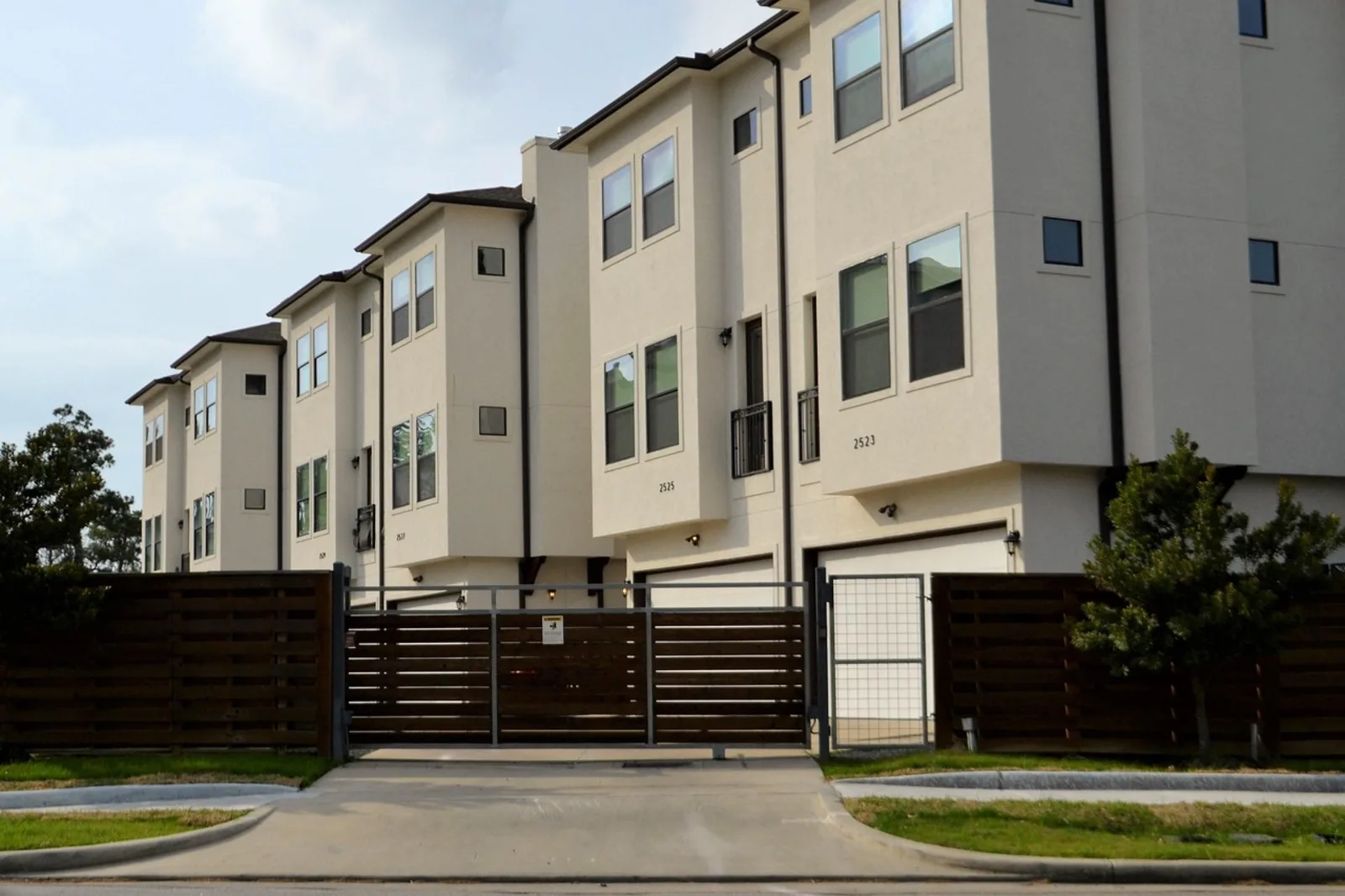
A duplex can clear a healthy margin or quietly lose money, and the difference usually comes down to one question: did you already own the land? Here's the full 2026 feasibility, worked two ways, plus the option that lets you build without funding it yourself.
A duplex looks like the perfect first development. Two dwellings instead of one, a familiar dual occupancy that councils across NSW now permit in every low-density R2 zone, and a build most local contractors can price without blinking. The idea sells itself. Whether it actually pays is a different question, and the honest answer is that it depends almost entirely on how you came to the land.
We build these projects, so we'll be upfront about our bias: on land you already own, a duplex is one of the most reliable ways to turn a single suburban block into two saleable homes. On land you have to buy at retail first, the same project gets much harder to make stack up. Same build, same council, very different outcome. Let's run both.
The feasibility, line by line
Start with the version most guides quietly assume: you already own the block. Say it's a standard 600 square metre R2 lot in the Illawarra with the old house on it, comfortably over the 450 square metre minimum and wider than 12 metres at the frontage, so a dual occupancy is permissible under the current Greater Sydney standards.
Here's roughly what building a pair of three-bedroom halves costs in 2026:
- Demolition and site clearing: $25,000 to $50,000, more if there's asbestos or difficult access.
- The build: full-brick duplex construction is landing around $2,000 to $3,800 per square metre depending on spec and builder, with premium or custom work pushing past $4,500. Two 150 square metre dwellings at, say, $2,800 per square metre is roughly $840,000.
- Consultants, approvals and contributions: design, engineering, certifier, BASIX, and council Section 7.11 contributions. Commonly $60,000 to $120,000.
- Selling costs: agent fees, marketing and legals across two sales. Around $60,000 to $90,000.
- Finance: interest on the construction facility across a 12 to 18 month project. On a build of this size, comfortably $60,000 to $100,000.
Land aside, you're into the project for something like $1.1 million all in. If the two finished halves sell for $850,000 each, that's $1.7 million gross, and the gap between the two numbers is where your profit and your land value both have to come from. Lenders generally want to see a margin around 20% on total cost before they'll fund a project, so that's the bar the whole thing has to clear.
Why owning the land is half the battle
Now watch what happens when you have to buy the site. Suppose that same 600 square metre development block costs $900,000 at retail. Add it to the $1.1 million build and you're at $2 million of cost chasing $1.7 million of sales. The project doesn't just miss its margin, it loses money outright.
That isn't a quirk of these particular numbers. It's the whole logic of development value. A developer buying that block can only pay what's left after the project's costs and required profit are stripped out of the end sales, which is exactly the residual land value method we've written about. The retail buyer paying $900,000 is pricing the block as a home. The feasibility prices it as a project. When those two numbers are close, there's no room left for anyone.
Which is why the landowner sits in a genuinely different position. You didn't pay retail for the site, you inherited it, or bought it as a home years ago, or it came with the tired house you've been living in. The land cost that sinks the retail buyer's feasibility simply isn't in yours. That single fact is the difference between a duplex that clears a real margin and one that never should have started.
When a duplex stacks up, and when it doesn't
A duplex tends to work when a few things line up. The block genuinely supports two dwellings under the dual occupancy rules, not just on paper but after setbacks, floor space ratio and driveway access are drawn up. The site is flat-ish with services at the boundary, because slope, rock and a sewer extension go straight onto the cost line. The finished halves sell into real local demand rather than a thin market. And, most of all, your land cost is low or already sunk.
It stops working when the opposite is true. A sloping block with a sewer main running through it can add $80,000 to $150,000 of civil work before you've laid a brick. A suburb where three-bedroom homes top out at $650,000 leaves no gap between build cost and sale price. And paying retail for the land, as we've seen, usually ends the conversation on its own. We have watched owners talk themselves into a duplex on a block that only ever supported one good house, and the feasibility was never going to forgive it.
The version where you don't fund the build
There's a path between "own the land and fund a million-dollar build yourself" and "sell the block and walk away", and most owners never get shown it. You contribute the land, a developer partner funds and manages the build, and you split the end profit on an agreed basis.
For a landowner sitting on a duplex-capable block but understandably wary of tipping a million dollars and 18 months of risk into a first development, this often makes more sense than doing it solo. You keep exposure to the project's upside, which on the right block beats today's sale price, without carrying the construction facility or managing the trades yourself. We've laid out how these arrangements are structured, priced and de-risked in our joint venture guide. It isn't free money, you're sharing profit for a reason, but it turns "I can't fund a build" from a full stop into a starting point.
One more decision worth making early rather than late: how you'll title the two halves. Torrens or strata subdivision changes both your cost and your resale price, and it's cheaper to plan for at the design stage than to retrofit. We've broken down that choice on its own, because it quietly moves the bottom line more than most owners expect.
So, is it profitable?
On land you already own, in a suburb with real demand, on a block that genuinely supports two dwellings, a duplex is one of the most dependable small developments in NSW right now. On retail-priced land, it usually isn't, and no amount of optimism about the build will fix a land cost that leaves no margin. The block you're standing on decides the answer, and the only way to know is to run your actual numbers rather than someone else's example.
That's the number we give you, free. PropertyThrive runs the full duplex feasibility on your block, land cost and all, and shows you the inputs rather than a headline figure, whether you build it, partner on it, or decide it doesn't stack up. Book a free assessment and we'll have your real numbers back to you within 24 hours.
Ready to get started with developing a property?
Get your development assessment or speak with our development experts today
24-Hour Response Guarantee
Submit your details and receive your preliminary development assessment within 24 hours, guaranteed.
No Obligation, Completely Free
Our assessment and initial consultation are completely free with no strings attached. Only proceed if you're 100% happy.
Strategic Development Partnerships
Partner with us to maximise development potential through joint ventures, profit-sharing, or direct acquisition options.