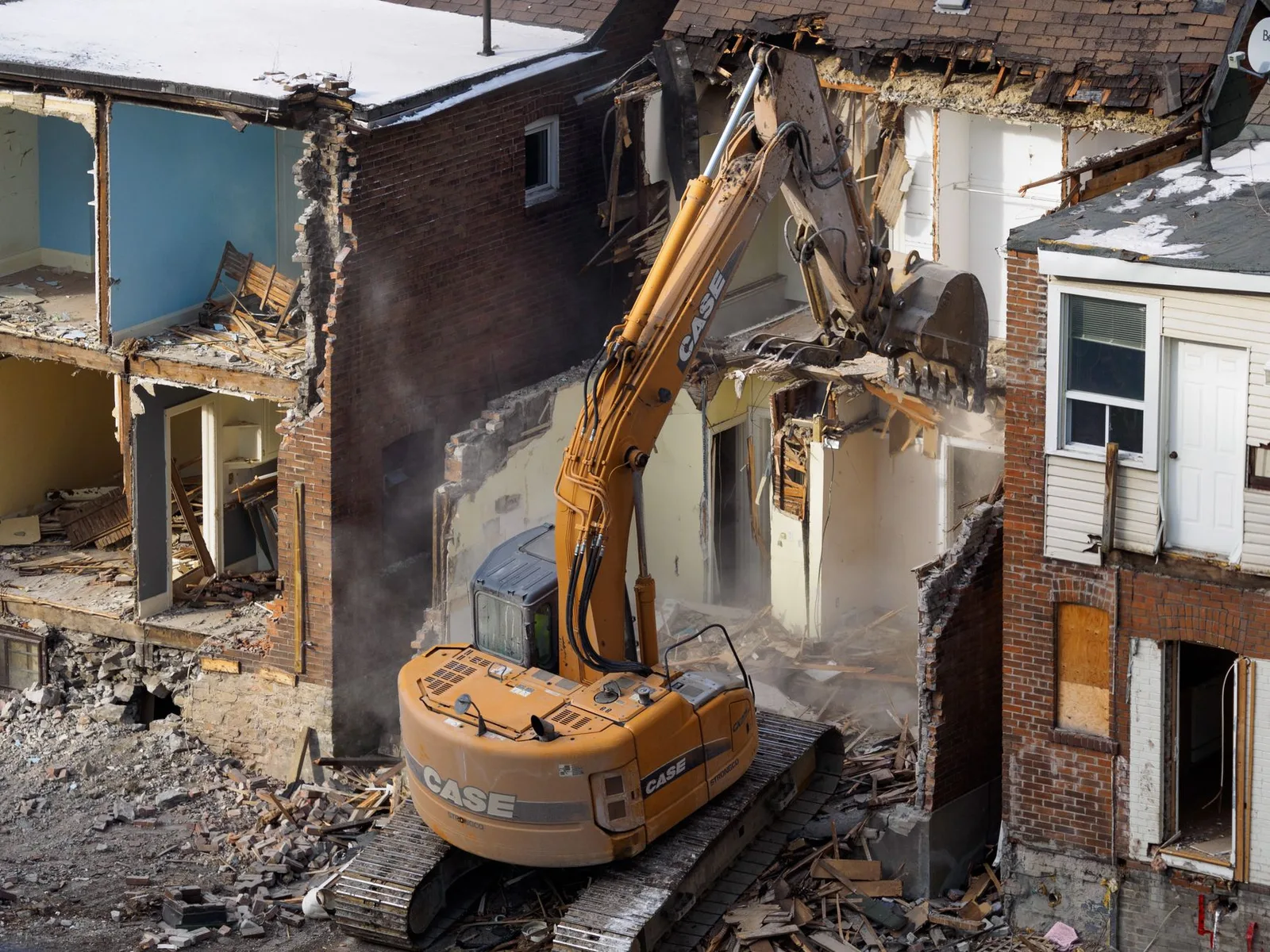
A knock down rebuild in NSW now runs from roughly $700,000 to well past $1 million once demolition, approvals and the build are counted. Sometimes that's money brilliantly spent. Sometimes selling the site, or partnering on its development, leaves you far better off. Here's how to tell which owner you are.
The house is tired, the block is good, and you're down to three options: renovate, knock it down and rebuild, or sell and let someone else deal with it. The renovation maths is usually easy to dismiss when the house is genuinely at the end of its life. The hard choice is between the other two, and most advice you'll find is written by someone selling one of them.
Builders will tell you a knock down rebuild is the obvious move. Agents will tell you to sell. We develop property, so our bias runs a third way, and we'll be upfront about it: on the right block, the most profitable option is often none of the above. But let's do the actual numbers first.
What a knock down rebuild really costs in 2026
The advertised price of a project home is the beginning of the story, not the end. A realistic NSW budget looks like this:
- Demolition and site clearing: $25,000 to $50,000 for a typical house, more with asbestos, slopes or difficult access
- The build itself: most new family homes are landing between $2,500 and $3,500 per square metre for standard construction, so a 250 square metre home runs $625,000 to $875,000. Architectural builds go well past that.
- Approvals, reports and design: $15,000 to $40,000 across DA or CDC, BASIX, engineering and consultants
- Site costs and services: piering, cut and fill, new connections, retaining. Commonly $30,000 to $80,000, and this is the line that blows out on sloping or reactive-soil sites
- Somewhere to live for 12 to 24 months. Rent for a family home in Sydney or the Illawarra is $40,000 to $70,000 a year, and build timelines have not been kind lately
Stack it up and a modest knock down rebuild is a $700,000-plus project; a generous one crosses $1 million without much effort. Anyone who tells you a firm number before studying your site is guessing.
When the rebuild wins
A knock down rebuild makes sense when three things line up. You love the location and plan to stay for many years, so the value you're building is a home first and an asset second. The block itself is straightforward, flat-ish, with services in place and no heritage or flood complications. And you can fund the project without stretching, because a build that stalls when money runs short is the most expensive outcome of all.
For owners who tick all three, rebuilding is often cheaper than buying an equivalent new house in the same suburb, and you get exactly the home you want. We see plenty of cases where it's clearly the right call.
When selling wins
Selling wins when the block is worth more to a developer than the finished home would be worth to you. That sounds abstract, so here's the concrete version: if your land supports a duplex, a dual occupancy or a small multi-dwelling project under the current planning rules, a developer is pricing your property off that project's profit. You're pricing it off one family home. Those two numbers can be hundreds of thousands of dollars apart.
In that situation, pouring $900,000 into a single new house on development-grade land is, financially speaking, building the wrong thing. You'd finish with a lovely home sitting on land whose highest value you just spent money erasing. Owners in rezoned corridors and near town centres hit this constantly, often without realising, because the zoning changed around them while they were living there.
Selling the site as-is also suits owners who simply want out cleanly: no build risk, no two years of rent, one settlement and done. And because development buyers don't care about the condition of the house, there's nothing to fix, stage or open-home.
The third option: keep the land working for you
Between "spend a million rebuilding" and "sell and walk away" sits the path most owners never get shown: partner on the development instead. You contribute the land, a developer partner funds and runs the project, and you take an agreed share of the end profit. On a block that supports multiple dwellings, that share frequently beats today's sale price, sometimes by a wide margin, because you're participating in the uplift rather than selling it.
It isn't for everyone. It takes longer, and you carry a share of project risk. We've written a plain-English guide to how these joint ventures are structured if you want the detail.
A simple decision test
Ask yourself two questions:
- Will I still want to live on this street in ten years? If yes, and the block is a straightforward build, the knock down rebuild deserves serious consideration.
- What does my land support beyond one house? If the answer is "more than one dwelling", get the development value assessed before you do anything else. Every other decision depends on that number, and most owners have never seen it.
The second question is the one we can answer for you. PropertyThrive assesses your block's development potential and gives you the real numbers for each path: rebuild, sell to a developer, or partner on the project. The assessment is free and there's no obligation attached to it.
Book a free consultation and we'll have your answer within 24 hours.
Ready to get started with developing a property?
Get your development assessment or speak with our development experts today
24-Hour Response Guarantee
Submit your details and receive your preliminary development assessment within 24 hours, guaranteed.
No Obligation, Completely Free
Our assessment and initial consultation are completely free with no strings attached. Only proceed if you're 100% happy.
Strategic Development Partnerships
Partner with us to maximise development potential through joint ventures, profit-sharing, or direct acquisition options.