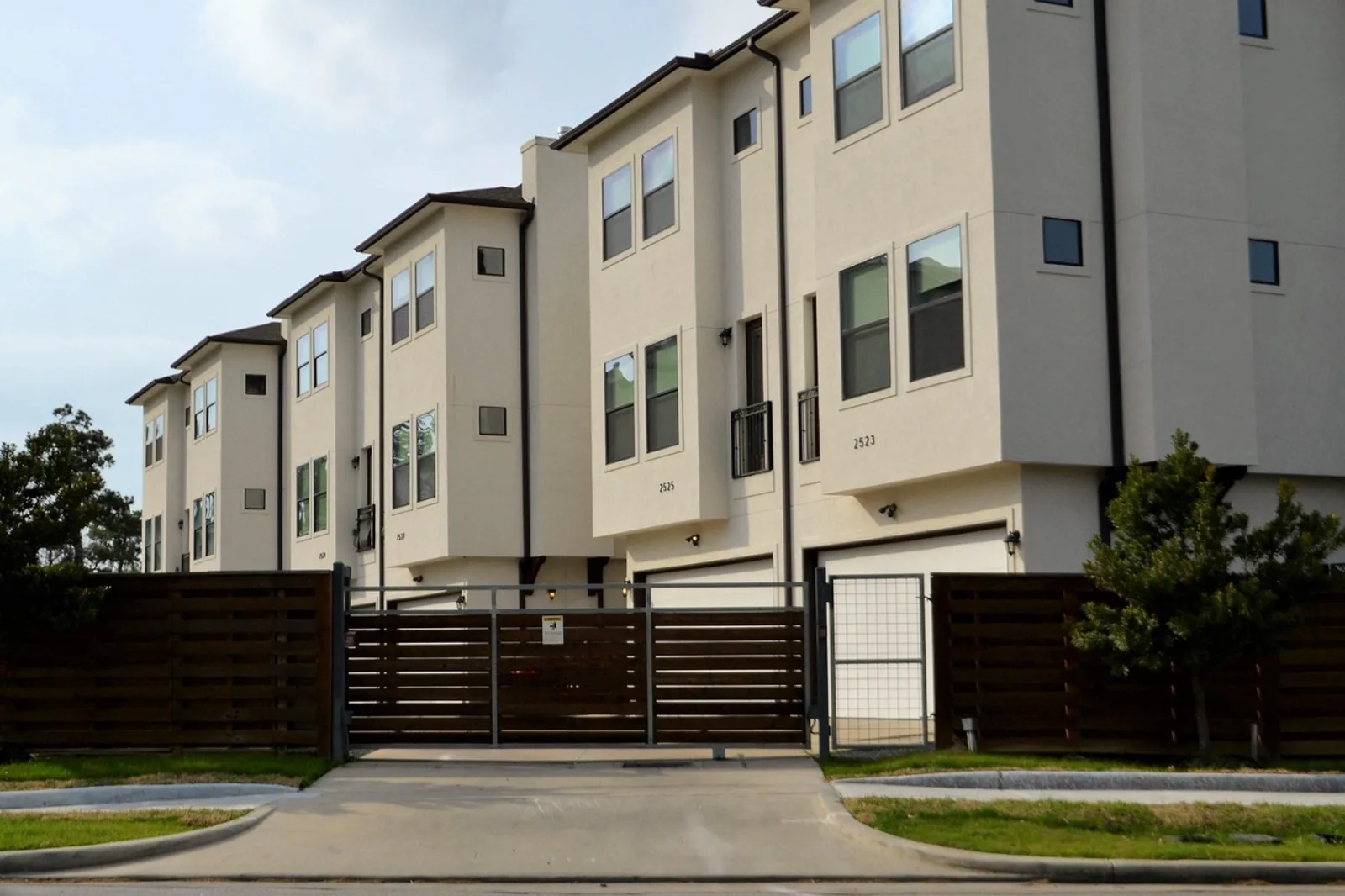
For most standard blocks in NSW the answer is now usually yes. Dual occupancy became permissible across every R2 low-density zone after the recent reforms, and on the right lot you can build two dwellings and split them onto separate titles. Here's what's allowed, the forms it takes, and the handful of situations where the answer is still no.
It's the question we hear more than any other, usually from an owner standing on a wide block wondering whether the backyard is worth more than it looks. Can I put a second house on here? For most of the last decade the honest answer in a lot of suburbs was no, or only with a fight. That has changed, and changed hard.
Since the 2024 and 2025 planning reforms, dual occupancy is permitted across every R2 low-density residential zone in NSW. That's the zone most family homes sit in. So for a large share of standard blocks, the answer to "can I build two dwellings here" is now usually yes, subject to meeting the standards. We develop these sites for a living, so let's walk through what's actually allowed before you get too excited, because "usually yes" still has real edges.
The short answer, and why it changed
Dual occupancy simply means two dwellings on one lot. The reforms made it a permissible use in R2 zones state-wide, which removed the single biggest barrier that used to stop these projects: whether your council allowed them at all. Now the question shifts from "is it permitted" to "does my block meet the standards", which is a far friendlier question to be asking.
For Greater Sydney, the controls to keep in mind are a maximum building height of 9.5 metres, a floor space ratio of 0.65 to 1, a minimum site area of 450 square metres, and a minimum lot width of 12 metres. Hit those and you're in the game. Councils outside Greater Sydney apply their own numbers, so the exact figures move around, but the shape of the test is the same.
The three forms it takes
"Two houses on one block" is a loose phrase, and the form you choose changes everything about the outcome, so it's worth being precise.
An attached dual occupancy is two dwellings that share a common wall, essentially a duplex. This is the most common form because it uses land efficiently and suits narrower blocks. The two halves can very often be subdivided and sold or held separately.
A detached dual occupancy is two entirely separate dwellings on the one lot, not touching. This needs more width or depth to work, but the result is two standalone houses, which many buyers prefer and which usually command stronger individual prices.
A secondary dwelling, which most people call a granny flat, is a different animal and it's the one that trips owners up. It's an accessory to the main house, capped at 60 square metres, one per lot, and it cannot be subdivided off onto its own title. It gives you rental income but not a second saleable asset. If your goal is two independent properties, a secondary dwelling is not the path, and it's worth reading exactly what a granny flat can and can't do before you assume it's the cheap version of the same thing. It isn't. It's a different thing.
The distinction that matters: a dual occupancy can usually be split into two titles. A granny flat cannot. That single fact often separates a modest income boost from a genuinely wealth-changing outcome.
Splitting it afterwards is where the value is
Building two dwellings is step one. Subdividing them onto separate titles is where the numbers really move, because two independently titled properties are worth considerably more than one block with two dwellings on it. The reforms allow subdivision of dual occupancy, which is what makes the whole exercise worth doing for most owners.
That subdivision brings its own costs and process, from survey and civil works to the choice between Torrens and strata title, and those choices have real consequences for the end value. We've set out what subdividing land actually costs in NSW separately, because it's the line most owners underestimate. But the principle is simple: the second title is where a big chunk of the profit lives, so any feasibility that stops at "two dwellings" and ignores the split is only telling you half the story.
When the answer is still no
Here's the honest part, because "usually yes" is not "always yes", and we'd rather you knew the deal-breakers now than after you've paid for plans.
Your block might be too small or the wrong shape. Under the minimum site area or narrower than the minimum width, and a compliant dual occ simply won't fit, no matter how much you want it to. A long thin lot or an awkward corner can fail on layout even when the raw area looks fine.
Heritage listing changes everything. A heritage item, or a property inside a heritage conservation area, brings a layer of assessment that can rule out a second dwelling or force a design so constrained it stops being viable.
Flood and bushfire mapping can shut it down. Land in a high-hazard flood zone or a serious bushfire-prone area carries controls that either prevent the additional dwelling or load enough cost onto the build to sink the feasibility.
Easements and encumbrances can kill a design. A sewer easement running through the middle of the block, a right of carriageway, or a significant tree with a protected root zone can leave you without room to place the second dwelling where it needs to go. These don't always stop a project, but they reshape it, and sometimes that reshaping is fatal.
Then there's the quieter one: the block that legally supports two dwellings but doesn't stack up financially, because slope, poor access or a long services run pushes the build cost past what the two finished dwellings will fetch. Permissible and profitable are not the same word.
Two houses, or the bigger picture
For a great many NSW owners on a standard R2 block, two houses on one block is now a realistic, permitted, genuinely profitable option in a way it simply wasn't a few years ago. If your block is over 450 square metres, wider than 12 metres, and free of the deal-breakers above, you should take the question seriously.
But dual occupancy is one option among several. The same block might suit a townhouse project, a knock-down of the existing house, or a straight sale to a developer who'll pay you off the project's profit rather than the house's value. The right answer depends on numbers most owners have never seen, and getting those numbers wrong in either direction, building too little or attempting too much, is expensive.
PropertyThrive runs the full feasibility on your block: what it's permitted to support, what each option would cost and return, and whether a dual occupancy is genuinely your best move or just the obvious one. It's free, and there's no obligation to do anything with it. Request a free assessment and you'll have your property's real numbers within 24 hours.
Ready to get started with developing a property?
Get your development assessment or speak with our development experts today
24-Hour Response Guarantee
Submit your details and receive your preliminary development assessment within 24 hours, guaranteed.
No Obligation, Completely Free
Our assessment and initial consultation are completely free with no strings attached. Only proceed if you're 100% happy.
Strategic Development Partnerships
Partner with us to maximise development potential through joint ventures, profit-sharing, or direct acquisition options.