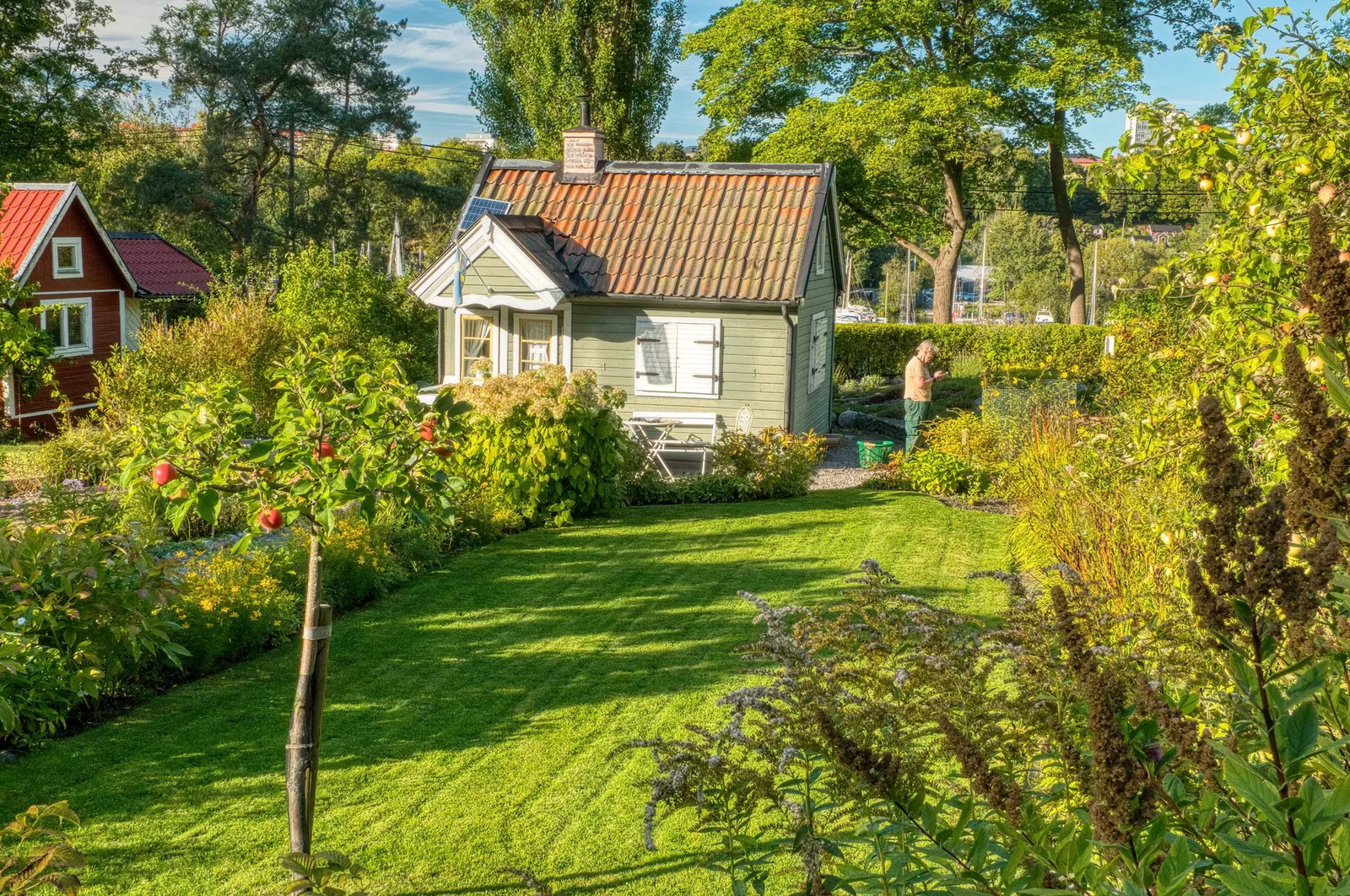
In NSW a granny flat can be approved by a private certifier in as little as 10 to 20 days, rented out separately, and built on most standard blocks over 450 square metres. It's the easiest secondary income a backyard can produce. It can also quietly cost you a much bigger development, and that's the part nobody mentions.
A granny flat is the one development almost any homeowner can picture. A neat second dwelling out the back, a tenant paying it off, the kids or the parents housed close by without being underfoot. In NSW the rules make it genuinely achievable, and on a lot of blocks it's the fastest approval in the whole planning system. We think it's a great tool. We also think it's the wrong tool more often than people realise, and we'll get to why.
First, what you're actually allowed to build.
The fast-track: CDC through a private certifier
Most granny flats in NSW are approved under the state's housing rules as complying development, which means a private certifier signs them off rather than council assessing a full application. When your block ticks every box, this is quick. A complying development certificate can be issued in as little as 10 to 20 days, and the ten-day statutory clock only starts once your documents are complete, so the real key is having your paperwork right the first time.
To qualify for that fast pathway, the common thresholds are these. Your lot needs to be at least 450 square metres. You need a frontage of at least 12 metres measured at the building line. The granny flat itself is capped at 60 square metres of internal living area, and you're allowed one per lot. Setbacks apply, typically around 3 metres at the rear, 0.9 metres to the side, and 3 metres from the main dwelling, though these shift with lot size and zone. When it's finished, you'll need an occupation certificate before anyone moves in.
Miss one of those standards and you don't lose the granny flat. You fall back to a council development application, the slower merit-assessed pathway, where a planner weighs your proposal on its individual merits and neighbours are notified. That still gets built. It just takes months rather than weeks, and it costs more to get through.
Yes, you can rent it out
This is the question we get most, and in NSW the answer is a clean yes. A secondary dwelling approved under the housing rules can be rented to anyone, not just family. It doesn't have to share a meter, a driveway or a bin night with the main house. That's what makes it such a tidy income play: a 60 square metre flat in a decent Illawarra or Sydney suburb can pull a meaningful weekly rent, and because the land is already yours, the return on the build cost is often stronger than any other addition you could make to the property.
That separateness is also why granny flats hold up so well when you eventually sell. A house with a compliant, separately tenantable flat behind it appeals to two buyers at once: the family who wants the extra space and the investor who wants the yield.
What a granny flat does not do
Here's where we declare our bias, because we develop property and we'd rather you heard this before you pour a slab, not after.
A granny flat is a secondary dwelling. It sits behind your house as an accessory to it. It does not create a second title, it can't be subdivided off and sold on its own, and it doesn't turn your block into two independent properties. It's income, not a new asset you can separate later.
That matters because on a lot of the blocks where a granny flat looks tempting, the land could actually support something worth far more. Since the 2024 and 2025 planning reforms, dual occupancy is now permitted across every R2 low-density zone in NSW. A dual occ is two proper dwellings, and in many cases those two dwellings can be subdivided onto separate titles and sold or held independently. That is a fundamentally bigger financial outcome than a single rentable flat out the back.
When the granny flat quietly blocks the better project
We have watched this exact situation turn a good block into a compromised one. An owner puts a 60 square metre flat in the rear yard because it was cheap and fast. Two years later they learn the block would have supported a detached dual occupancy or even two houses they could split and sell. But the granny flat is now sitting on the part of the land the second dwelling needed, the yield maths no longer works, and unwinding it means demolishing something they just paid to build.
The flat didn't fail. It succeeded at being a granny flat. The problem is it occupied land that had a higher use, and once it's there, that higher use is off the table until it comes down.
This is the single check we'd urge any owner to do before committing. Ask what your block supports at its highest and best use, not just what's easy to approve. If the answer is "one house and a granny flat", then the granny flat is a smart, low-friction income addition and you should go ahead. If the answer is "this land supports two dwellings you could subdivide", the granny flat may be the most expensive $150,000 you ever spend, because of the far larger uplift it prevents.
The rough cost picture
For a straightforward build, a granny flat in NSW commonly lands somewhere in the low-to-mid six figures depending on size, finish, slope and how far services have to run. Add the certifier, the design, engineering and the connections, and it's still one of the cheapest ways to add a genuinely income-producing dwelling to a property you already own. Sites with fall, poor access or a long sewer run cost more, and those same site conditions are worth understanding early because they also affect what a bigger project would cost. If subdivision is ever on your horizon, it's worth reading what it actually costs to split land in NSW before you decide.
So, build the flat or not?
For most owners on a standard block who want extra income or space for family, a granny flat is one of the best-value moves available in NSW right now. Fast approval, separate rent, real resale appeal. We'd happily tell you to get on with it.
But we'd want to see the block first. The only real mistake with a granny flat is building one on land that was quietly worth a great deal more, and that's a mistake you can only avoid by knowing the number before you start.
PropertyThrive assesses your block's full development potential, granny flat, dual occupancy, subdivision or sale, and shows you the real figures for each path so you're choosing with the whole picture in front of you. The assessment is free and comes with no obligation. Book a free assessment and we'll have your answer within 24 hours.
Ready to get started with developing a property?
Get your development assessment or speak with our development experts today
24-Hour Response Guarantee
Submit your details and receive your preliminary development assessment within 24 hours, guaranteed.
No Obligation, Completely Free
Our assessment and initial consultation are completely free with no strings attached. Only proceed if you're 100% happy.
Strategic Development Partnerships
Partner with us to maximise development potential through joint ventures, profit-sharing, or direct acquisition options.