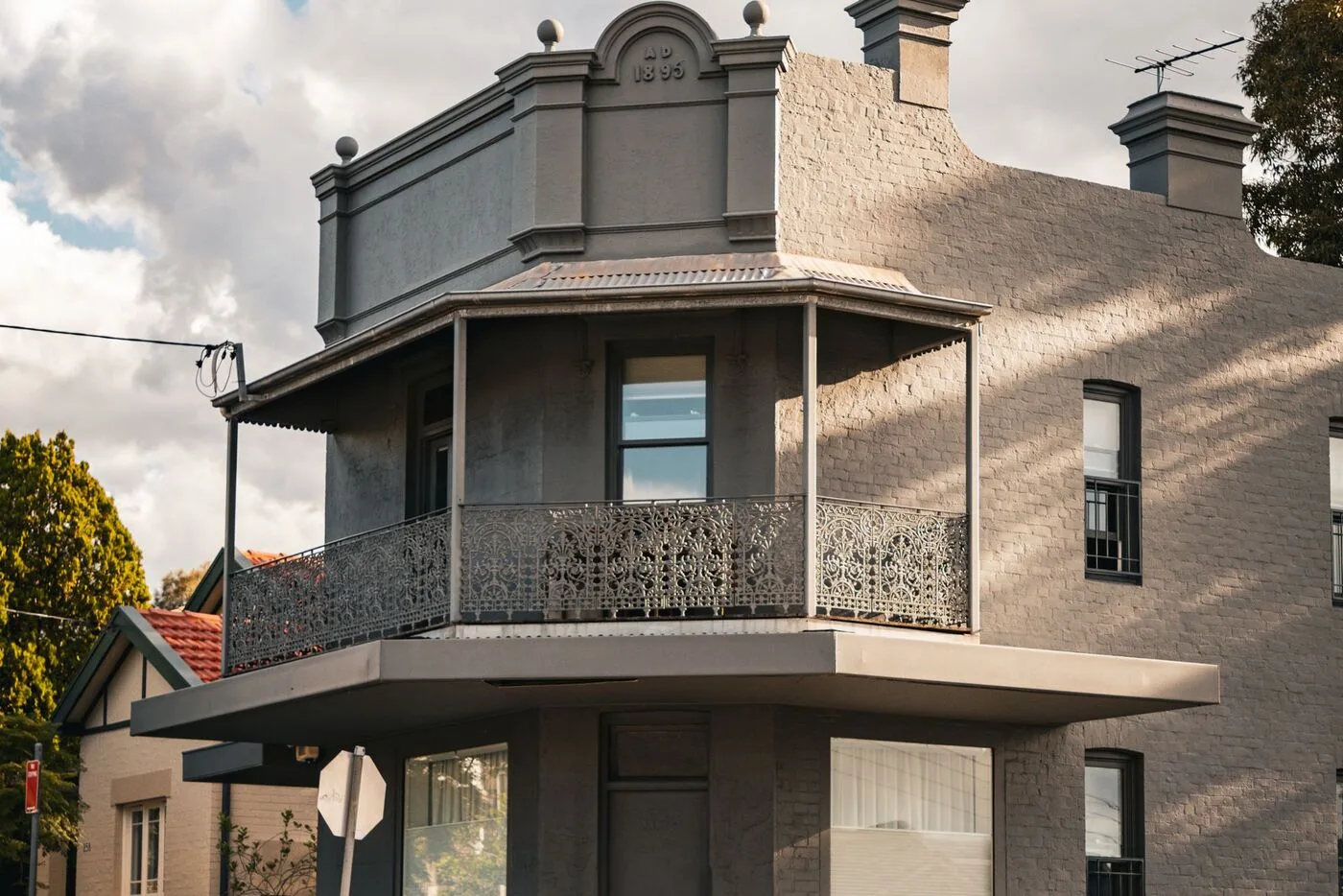
Heritage Conservation Areas: The Overlay That Doesn't Stop the Mid-Rise Reforms
Owners inside a conservation area are routinely told their block is off limits, and the people telling them are usually confusing two very different things. The Low and Mid Rise Housing Policy excludes heritage items. It does not exclude heritage conservation areas, and the difference decides whether your land carries development value or none at all.
The most common thing I hear from an owner in a conservation area, before I've said anything at all, is a version of the same sentence: we're heritage, so nothing can happen here. It's usually delivered as settled fact, sometimes with relief and sometimes with resignation, and it's usually been picked up from a neighbour, an agent, or a council officer answering a question over the phone in thirty seconds.
Roughly half the time it's wrong, and the half where it's wrong is the half that matters.
Two entirely separate things get folded into the word "heritage" in NSW, and they behave nothing alike. A heritage item is a specific property listed in Schedule 5 of the local environmental plan, or on the State Heritage Register under the Heritage Act 1977. Your house, individually, by address. A heritage conservation area is a mapped precinct — a few streets, a subdivision pattern, a run of interwar cottages — where the significance sits in the collective, and where any individual house may or may not contribute anything to it.
Both appear on your planning certificate. Both get described by the same word in conversation. They produce almost opposite outcomes under the housing reforms.
The exclusion that isn't there
The Low and Mid Rise Housing Policy carries a list of land it doesn't apply to, and the department publishes it. On heritage the wording is narrow: land that comprises or contains a heritage item listed in a local environmental plan or the State Heritage Register.
That's it. Heritage items. Read the full exclusions list and you'll find bushfire vegetation categories 1, 2 and 3 with their buffer, the Hawkesbury-Nepean probable maximum flood, the flood planning area across 22 named councils, coastal wetlands and littoral rainforest and coastal vulnerability areas, ANEF 25 and above, a 200 metre buffer around high-pressure pipelines, the TOD precincts, and four whole local government areas. What you won't find is heritage conservation areas.
They're not on the list. The policy applies inside them.
This is not an oversight that's about to be quietly patched, either. Several councils and a number of residents' groups have been campaigning on precisely this point since the reforms commenced, arguing that conservation areas should have been carved out alongside items. They weren't, and the department has not moved. Whatever you think of that as policy — and there are real arguments on both sides about what dual occupancies and mid-rise infill do to a coherent Federation streetscape — as a matter of what applies to your land today, an HCA is not a bar.
So a lot inside a conservation area, in the right zone and inside the walking catchment, can carry the same permissibility as the identical lot two streets outside it. Same housing types on the menu, same standards. What changes is not whether you may develop. It's what you have to satisfy on the way through, and that's where the real cost sits.
What clause 5.10 actually does to you
Every standard-form LEP in NSW carries clause 5.10, Heritage conservation, and it's the operative control on your block. Inside a conservation area it requires development consent to demolish or move a building, to alter its exterior, to erect a new building, and to subdivide the land. It also reaches out beyond the mapped boundary: work in the vicinity of a heritage item catches the same clause, so the property next door to a listed cottage inherits some of the listed cottage's constraints without being listed itself.
There's a relief valve. Sub-clause (3) lets the consent authority tell you in writing, before you start, that it's satisfied the work is minor or is maintenance and won't affect the significance of the area — and then you don't need consent. Useful for a fence or a roof. Not useful for anything that changes your yield.
Clause 5.10 also has a provision most owners have never heard of, sub-clause (10), the conservation incentive. It lets a council consent to a use that would otherwise be prohibited on land containing a heritage item, where that's the mechanism for conserving the building. The Land and Environment Court has read it narrowly and consistently over the years, so treat it as a specialist argument run with a heritage consultant, not as a planning trick. It's worth knowing it exists. It's not worth building a feasibility on.
The second constraint is quieter and hits earlier. Complying development is largely unavailable inside a conservation area. The Codes SEPP restricts it to a short list of things like detached outbuildings and swimming pools, which means the fast CDC pathway that a comparable block outside the area could use is closed to you. Everything meaningful goes through a development application, with notification, with a heritage referral, and with the assessment timeframe that implies.
That is a cost. It is not the same thing as a prohibition, and the two get conflated constantly.
Contributory, or not
Here's the question that decides your project, and it isn't answered by the LEP at all.
Councils sort the buildings inside a conservation area into contributory and non-contributory, usually through the development control plan or a conservation area statement sitting behind it. A contributory building is one carrying the character the area was listed for: the Federation weatherboard with its original verandah detail, the run of matching brick semis, the intact interwar bungalow. A non-contributory building is inside the boundary and adds nothing to it — the 1974 brick veneer that replaced something, the 1990s infill with an aluminium window wall, the block of six that went up before the area was mapped.
Demolishing a contributory building is very hard and gets refused. Demolishing a non-contributory one is an ordinary planning argument, and councils frequently expect that it will happen eventually, because the DCP language usually says such sites are anticipated to be upgraded when redeveloped.
Owners almost never know which one they are. Agents guess. The classification is public, it's usually in a schedule or a map in the DCP, and finding it is a morning's work that changes the value of the land by a large multiple. If your building is non-contributory in an R3 conservation area inside 400 metres of a station, you are sitting on something quite different from what you've been told.
I'd add one honest caveat, because I've watched this go wrong. Non-contributory does not mean unconstrained. The replacement still has to sit in the streetscape — setbacks, roof form, fenestration rhythm, materials, front fencing, sometimes the retention of a street tree — and a heritage-sensitive design costs more per square metre than the same yield delivered on a plain suburban block. Call it a design premium and put a real number on it in the feasibility rather than discovering it at tender.
What this does to the numbers
The arithmetic is the same as anywhere else. Net realisation less total development cost, solved for margin or solved for land. The conservation area changes three inputs and leaves the rest alone.
Time goes up. A DA with a heritage referral in a notified area runs longer than a comparable one outside, and if the neighbours are organised — in conservation areas, they generally are — longer again. Holding cost is a real line, and on an option period it's the seller who wears it.
Cost goes up. A statement of heritage impact from a consultant is an additional report at DA stage, and the design itself carries the premium described above. Neither is enormous. Both are certain, so they belong in the base case rather than the contingency.
Risk changes shape. The go/no-go usually isn't the height or the floor space ratio, it's whether the existing building can come down. That's a question with a knowable answer well before you spend money on drawings, which makes it the cheapest risk in development to retire — and the most frequently left until last.
Everything else holds. The floor space ratio on the map is the floor space ratio you're arguing for, and what a developer will pay for the land is still a function of what the land lets them build.
Before you accept that nothing can happen
Three things, and none of them requires a consultant.
Pull the property up on the NSW Planning Portal spatial viewer and look at the heritage layer specifically. It will show you an item as a point or parcel and a conservation area as a shaded precinct. If your parcel is shaded but not marked as an item, you're in the half of this that people get wrong.
Order the planning certificate and read the heritage entries word for word. It will name the item or the area and cite the clause. It will also tell you whether the land is in a draft listing, which behaves like a real one for practical purposes and is easy to miss.
Then find the conservation area statement in your council's DCP and locate your address in the contributory schedule. That's the number that moves.
If those three come back as conservation area, non-contributory, no item, and the zone and catchment are right, you are not the constrained property you've been told you are — and the neighbours who've assured you otherwise have been quoting the item rule at a precinct problem.
PropertyThrive runs this assessment for owners at no cost, heritage overlay included, and we'll tell you plainly when the answer is no, because on contributory buildings it often is. Book a free assessment and you'll have the entitlement, the constraint and an honest read on the demolition question within 24 hours.
Ready to get started with developing a property?
Get your development assessment or speak with our development experts today
24-Hour Response Guarantee
Submit your details and receive your preliminary development assessment within 24 hours, guaranteed.
No Obligation, Completely Free
Our assessment and initial consultation are completely free with no strings attached. Only proceed if you're 100% happy.
Strategic Development Partnerships
Partner with us to maximise development potential through joint ventures, profit-sharing, or direct acquisition options.