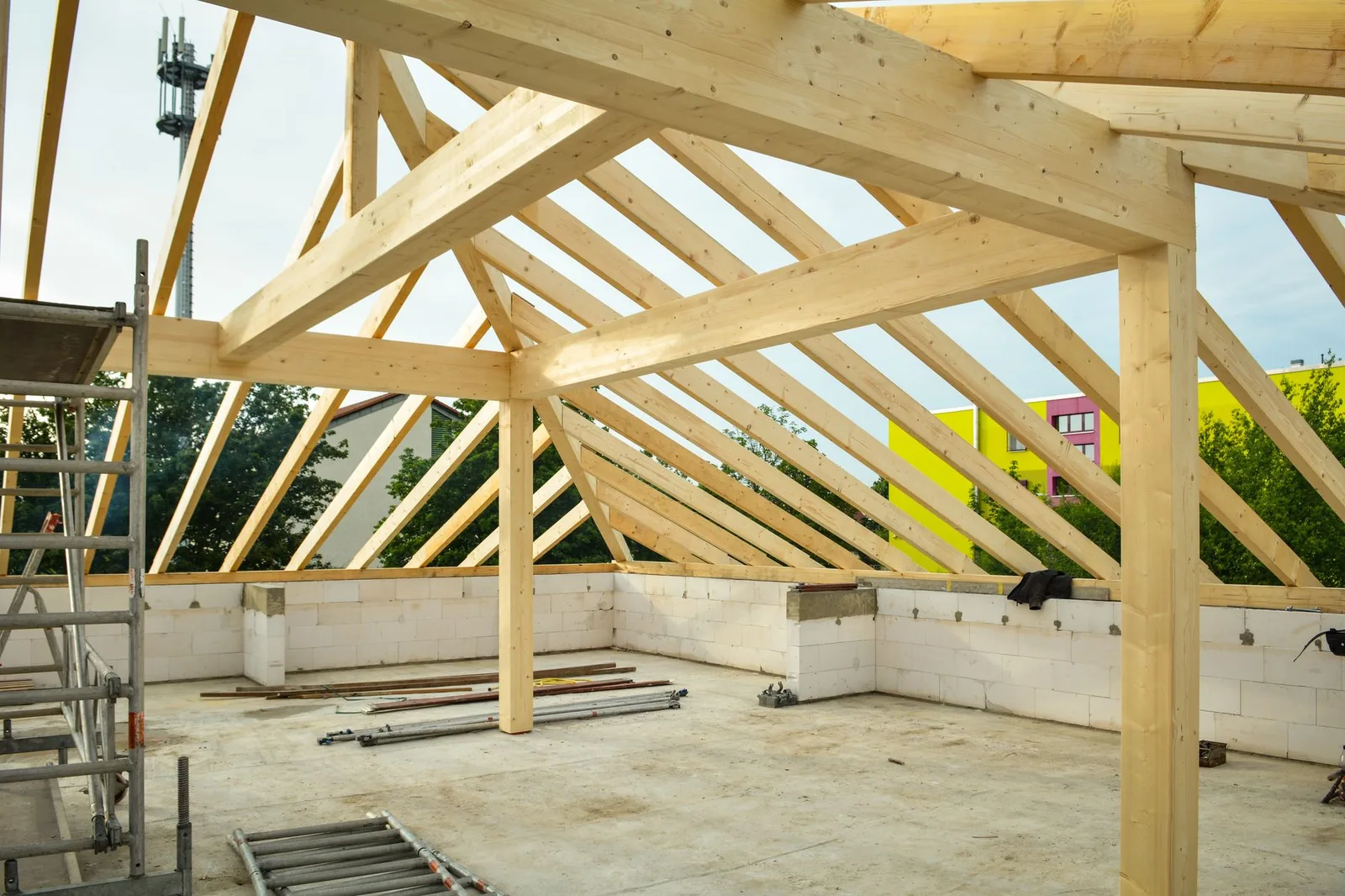
Before you get to knock-down-rebuild territory there's an earlier fork: renovate the tired house, demolish it, or step back and ask what the land is worth to a developer. Each answer suits a different owner, and choosing the wrong one can quietly destroy the very value you're trying to unlock. Here's how to tell them apart.
The house is dated, the kitchen is thirty years old, and every conversation at dinner circles the same question: do we do it up, knock it down, or is it time to walk away from the place entirely. It's the decision almost every owner of an ageing home reaches eventually, and it usually arrives dressed up as a renovation question when it's really a bigger one.
Most advice jumps straight to knock-down-rebuild, comparing the cost of a renovation against the cost of a new house. That's a fair comparison, and we've written about when a knock down rebuild beats selling at length. But there's an earlier fork most owners never stop at, the one that decides whether you're even asking the right question: renovate, demolish, or redevelop. Get this one right and the rest follows. Get it wrong and you can spend a fortune erasing the thing that made your block valuable in the first place. We develop property, so we'll be upfront that redevelopment is one of the lenses we bring, but this piece gives all three an honest hearing.
When renovation is the rational call
Renovation is the right answer more often than developers like to admit. If the house has good bones, a sound structure, a sensible layout, walls in the right places, and you love the location and plan to stay for years, then doing it up rather than starting over can be the smartest money you spend. You keep the character, you avoid the cost and disruption of a full rebuild, and you get a home shaped to how you actually live.
The trap is old houses. A renovation budget on a genuinely tired home is one of the least reliable numbers in property, because the expensive problems are the ones you can't see until the walls are open. Rewiring an old house to current standards, replumbing failing pipes, fixing stumps or footings that have moved, dealing with asbestos, bringing bathrooms and wet areas up to code. These routinely turn a tidy renovation budget into something close to double by the time it's done. We've watched owners set out to spend $150,000 freshening a house and finish north of $300,000 because the structure underneath demanded it. Renovation rewards a house with good bones and punishes one without them, and the only way to tell which you have is to look properly before you commit.
When demolition is the honest answer
Sometimes the kindest thing you can say about a house is that it's reached the end of its life. When the structure is failing, the layout can't be rescued without effectively rebuilding it anyway, and the cost of renovating creeps toward the cost of new, demolition stops being a waste and becomes the honest answer. There's no virtue in pouring money into a shell that will never repay it.
Demolition itself is a known quantity. Clearing a typical house in NSW runs roughly $25,000 to $50,000, more with asbestos, a difficult site, or restricted access. That's the cost of a clean slate, and on good land it's often money well spent, because what you build next is worth far more than what you cleared. The mistake is treating demolition as automatic. Knocking down a house to build one new home on the same footprint is only one version of "clean slate," and it's not always the most valuable one.
The third lens most owners never apply
Here's the question that reframes everything: what is the land worth to a developer, and does renovating actually destroy that value? Owners instinctively compare renovation cost against rebuild cost, both measured as a home for themselves. Almost nobody asks what the block is worth to someone building multiple dwellings on it.
That omission is expensive. If your land now supports a duplex, townhouses, or a small multi-dwelling project under the current NSW planning rules, a developer is pricing your property off that project's profit, not off one renovated house. Pour $250,000 into renovating a home that sits on development-grade land and you've done something quietly self-defeating: you've spent money improving a house whose highest value was never the house at all, it was the land underneath it, and a developer is going to demolish your lovely new kitchen anyway. The renovation didn't add value. It consumed it. Understanding how developers value your land is what stops this happening, because it shows you whether your block is a home to improve or a site to develop.
This is where redevelopment sits as a genuine third option, distinct from a simple knock-down-rebuild. Rather than clearing the house to build one replacement home, you either sell the site to a developer who realises its full yield, or you look at what the block itself supports, which might be two houses on the one block rather than one. The land's potential, not the house's condition, is doing the deciding.
How to sequence the decision
The trap in all of this is starting with the house and never lifting your eyes to the land. So run it in the right order. First, get the block's development potential assessed: does the zoning and the shape and size support more than one dwelling? That single answer reshapes everything else. If the land is development-grade, renovating is usually the wrong move regardless of how good the bones are, because you'd be improving something a buyer intends to remove. If it's a plain residential block with no development angle, then the honest renovate-versus-demolish comparison is the right one, decided on the structure's condition and your plans for staying.
A quick sense-check on your own situation is worth doing before you spend anything: does the house have genuinely good bones, do you intend to stay for years, and does the land support only a single home? Three yeses point toward renovation. A failing structure with no development angle points toward demolition and a rebuild. And development-grade land, whatever the house is doing, points toward getting the site valued as a project before you touch it. It's the same discipline behind our ten-point suitability checklist: assess the land first, decide the building second.
PropertyThrive runs that land assessment for free and without obligation. We'll tell you honestly whether your block is a home worth renovating, a site worth clearing, or land worth far more to a developer than any renovation could add, and we'll show you the numbers for each. Book a free consultation and you'll have your answer within 24 hours.
Ready to get started with developing a property?
Get your development assessment or speak with our development experts today
24-Hour Response Guarantee
Submit your details and receive your preliminary development assessment within 24 hours, guaranteed.
No Obligation, Completely Free
Our assessment and initial consultation are completely free with no strings attached. Only proceed if you're 100% happy.
Strategic Development Partnerships
Partner with us to maximise development potential through joint ventures, profit-sharing, or direct acquisition options.